
mathematics
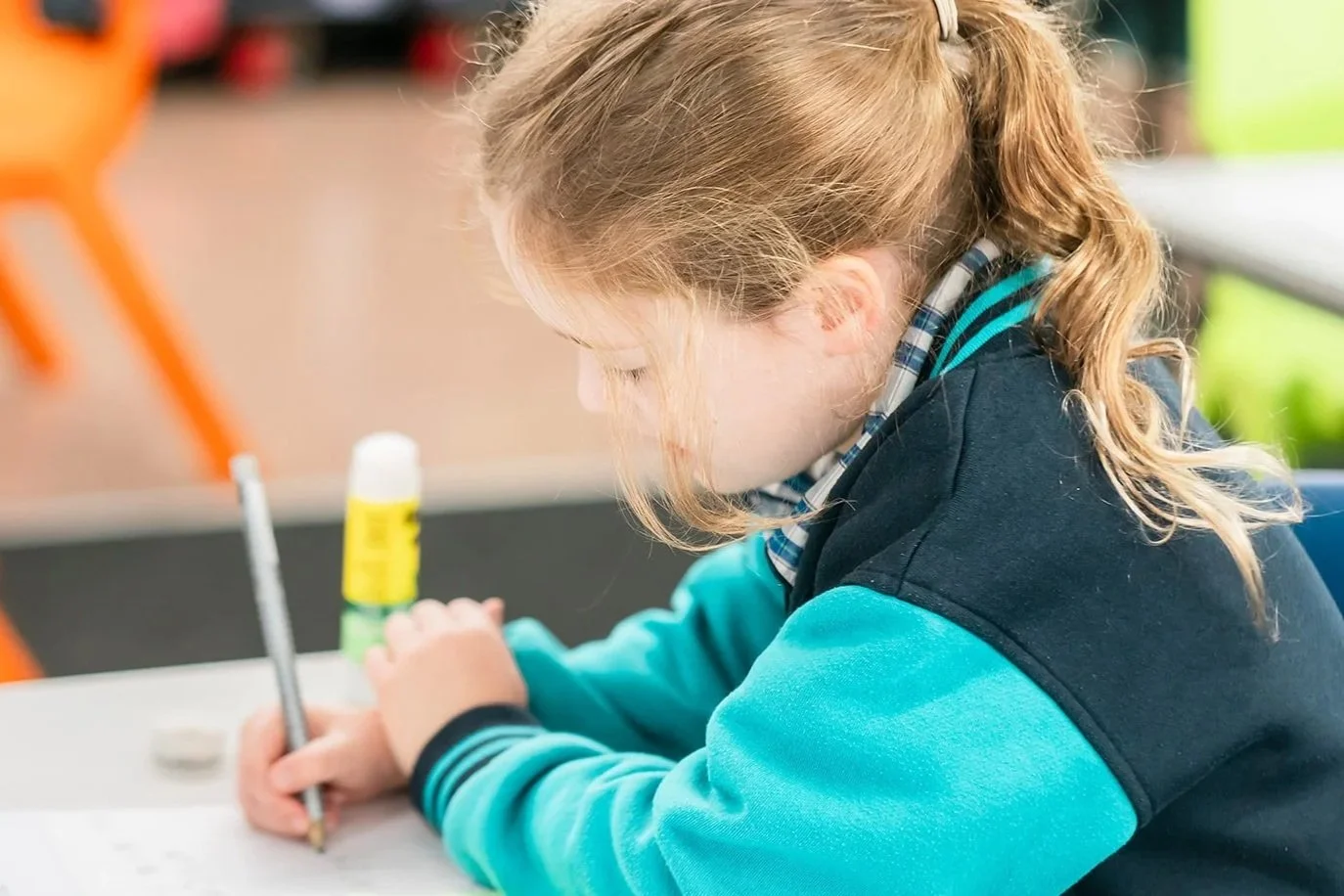
Our Mathematics program provides all Prep-Year 6 students with daily mathematics learning, guided by a carefully developed scope and sequence informed by current research. Each lesson begins with explicit teaching, where key concepts and strategies are clearly modelled by the teacher.
We follow a Gradual Release of Responsibility model, ensuring students are supported and scaffolded as they build understanding and confidence before moving towards independent application. Lessons are planned using student data, allowing teachers to target learning to students’ individual needs and ensure appropriate challenge and support.
Our maths classrooms are engaging and purposeful learning environments. Teachers use a range of concrete materials, visual representations and mathematical models to help students explore new concepts and make connections between mathematical ideas. Opportunities for reasoning and problem-solving are embedded throughout lessons, encouraging students to explain their thinking, apply strategies and develop confidence as mathematicians.
We use a range of assessment practices to monitor progress and inform teaching, including pre- and post-assessments, Diagnostic Assessment of Learning (DAL), PAT assessments, and whole-cohort moderation. Teachers regularly check for student understanding throughout lessons using strategies such as mini-whiteboards, targeted questioning and opportunities for students to explain their thinking. This allows teachers to provide immediate feedback, address misconceptions and adjust instruction to meet learning needs. This consistent approach enables us to track growth and maintain high standards across the school.
Our teachers ensure that students develop well-rounded skills by planning lessons and units according to four key principles:
• Understanding: Students develop deep knowledge of mathematical concepts, rules, and structures by making connections between ideas and representing them in multiple ways.
• Fluency: Students build confidence in selecting and carrying out calculations flexibly, accurately, and efficiently.
• Problem-Solving: Students apply their knowledge and skills to unfamiliar situations, modelling real-world problems and using effective strategies to find solutions.
• Reasoning: Students explain, justify, and prove their mathematical thinking, using evidence to support their decisions and evaluate solutions.
Our Old Orchard Mathematics Curriculum Map provides teachers with clear guidelines about what to teach and when. This ensures that Mathematics instruction is consistent across the school. Teachers regularly revisit and reteach key concepts throughout the year to strengthen understanding and deepen student knowledge. Ongoing review is embedded into classroom practice, supporting students to retain and build on their learning over time.
Through this consistent, well-supported, and engaging approach to Mathematics, students at Old Orchard Primary School develop the skills, confidence, and mindset needed to succeed. We aim to empower all learners to think critically, solve problems creatively, and see themselves as capable and confident mathematicians.